In East Eugene, "Already Handled" Doesn't Mean Handled Anymore
August 13, 2026
August 13, 2026
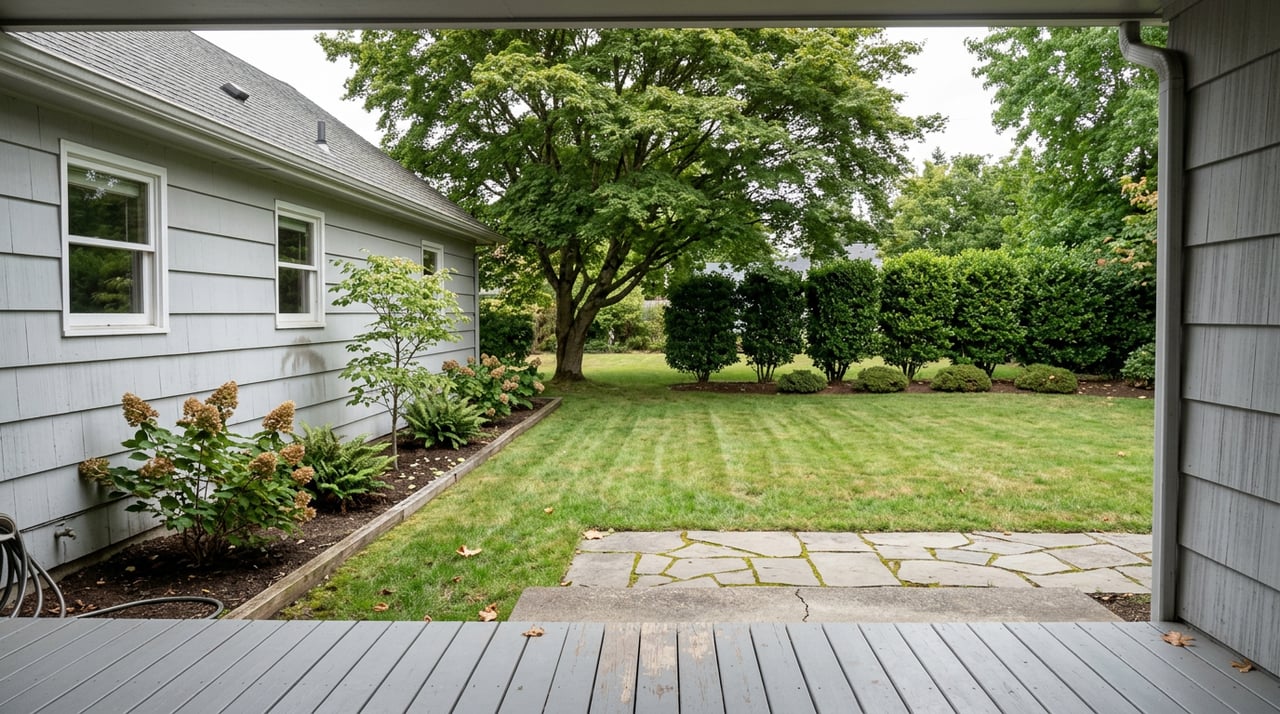
Every character home in East Eugene comes with two systems nobody thinks about until a sale is on the line: what's buried in the yard, and what's running under it. The oak that shades the porch. The fill cap someone painted over decades ago. Most sellers assume both are settled questions, closed chapters from a previous owner's to-do list. A buyer's inspector treats them as open questions, and the timeline for answering them shrinks the moment you're under contract.
That's the friction East Eugene sellers hit more than almost anywhere else in Lane County. The neighborhood's defining assets, its age and its tree canopy, are also its two most common points of inspection surprise. Understanding why turns a potential renegotiation into a line item you handled on your own schedule.
Oregon's Department of Environmental Quality puts the useful life of an unprotected steel heating oil tank at about 20 years. Homes built prior to 1965 were commonly heated with oil, with the tank buried somewhere in the yard rather than sitting in a basement. Run the math on a home from that era and the tank buried under the lawn passed its rated lifespan sometime around 1985. It has been living on borrowed time for four decades, whether or not anyone has thought about it since the furnace was swapped out.
That doesn't mean the tank is failing. It means nobody has checked, and checking is exactly what a buyer's lender or inspector will insist on before closing.
| Seller assumption | What actually applies |
|---|---|
| "It was decommissioned years ago, so it's done." | Any decommissioning completed before 2009 is commonly flagged by inspectors for a fresh look, since documentation and testing standards have tightened since. |
| "I switched to gas decades ago, so it's not my problem now." | Oregon law (ORS 466.878) requires the seller to ensure an abandoned tank has been emptied and to give the buyer documentation proving it, regardless of when it stopped being used. |
| "There's no visible leak, so there's nothing to disclose." | State law (ORS 105.464) requires a seller disclosure statement on any known underground tank or contaminated soil, whether or not a leak has surfaced. |
| "I got it tested a while back, that assessment still counts." | DEQ won't accept site assessment data more than 90 days old when certifying a decommissioning or cleanup. |
None of this means every East Eugene tank is a problem. It means the paperwork that felt final when it was filed doesn't stay final, and a buyer's team will be the one to point that out if you don't get there first.
The mature canopy that gives East Eugene its character is doing something underground that has nothing to do with curb appeal. Root systems from decades-old trees seek out the moisture and nutrients inside sewer laterals, and they find the joints and seams in older pipe long before anyone notices a problem at the surface.
A local Eugene inspection provider is direct about this: sewer scopes matter most in older homes and homes near large trees, and root intrusion along with offset joints are among the most common findings in Eugene neighborhoods. A sewer scope isn't part of a standard home inspection. It's an optional add-on, which means the healthiest-looking tree on the lot can be sitting over a lateral that's already compromised, and nobody finds out unless someone specifically goes looking.
That's the second half of the same pattern as the oil tank. The thing that looks fine on the surface, whether it's an old decommissioning letter or a thriving oak, isn't evidence that the system underneath it is fine. It's just evidence that nobody has checked recently.
When a buyer adds a sewer scope during their inspection period, the camera is looking for a specific, predictable set of issues:
Clear video from that scope becomes leverage in negotiation, useful for repair requests or price credits in a market where East Eugene inventory moves quickly. If a seller has already run that scope before listing, there's no surprise for a buyer's inspector to use as leverage in the first place.
Handling a tank decommissioning on your own timeline, before a buyer is involved, is a budgeted project with a known scope. If soil contamination turns up, the picture changes: remediation costs can run into the tens of thousands of dollars on top of removal, depending on the size of the leak, according to an Oregon environmental services firm that handles this work statewide.
The number itself isn't the problem. The clock is. DEQ's 90-day rule on site assessment data means a seller who runs an assessment during listing prep has a defined runway to act on the results. A seller who first learns about a tank issue from a buyer's inspector is working inside a much shorter inspection contingency window, often with a buyer already anxious about the same discovery. The same repair costs the same amount either way. Only one version lets you control the timeline.
Two moves handle both frictions before a buyer's team finds them first.
For the tank question, request your property's records from Oregon DEQ before you list. The state maintains its own online records system for heating oil tank decommissioning history, and a licensed heating oil tank service provider can run a tank locate if your records are incomplete. If a tank was decommissioned before 2009, treat that documentation as a starting point for a conversation with a licensed provider, not as a closed file.
For the sewer question, book a scope as part of your pre-listing prep rather than waiting for a buyer to request one. It's a modest cost against the alternative of a credit negotiated under contract, and it turns your mature tree canopy back into what it's supposed to be: a selling point instead of a question mark.
This is the kind of groundwork Parker Heights Realty walks East Eugene sellers through before a listing ever goes live, lining up the right local, licensed contractors so an inspection period surfaces confirmations instead of surprises.
Do I have to remove my oil tank to sell a home in Oregon? Not necessarily. Oregon law requires the tank be emptied and documented if it's abandoned, but full removal versus filling it in place with inert material are both recognized decommissioning methods under state rules. What you can't do is leave it unaddressed and undocumented once you're selling.
How old can a decommissioning letter be before a buyer's lender questions it? There's no single statewide cutoff, but documentation completed before 2009 is commonly flagged for a second look by inspectors and lenders, since testing standards have tightened since then. Older paperwork is a reasonable starting point, not a guarantee it will satisfy a 2026 buyer's requirements.
Is a sewer scope required to sell a home in Eugene? No. It's an optional add-on to a standard home inspection, which is exactly why it's worth doing proactively. If you don't order one before listing, there's a good chance your buyer will during their inspection period, and by then it's their leverage instead of your groundwork.
If you're weighing a listing in East Eugene this year and want a clear-eyed look at what a buyer's inspection is likely to surface, Parker Heights Realty offers a free consultation and home valuation to walk through it before it becomes a negotiation.
Stay up to date on the latest real estate trends.


We pride ourselves in providing personalized solutions that bring our clients closer to their dream properties and enhance their long-term wealth. Contact us today to find out how we can be of assistance to you!