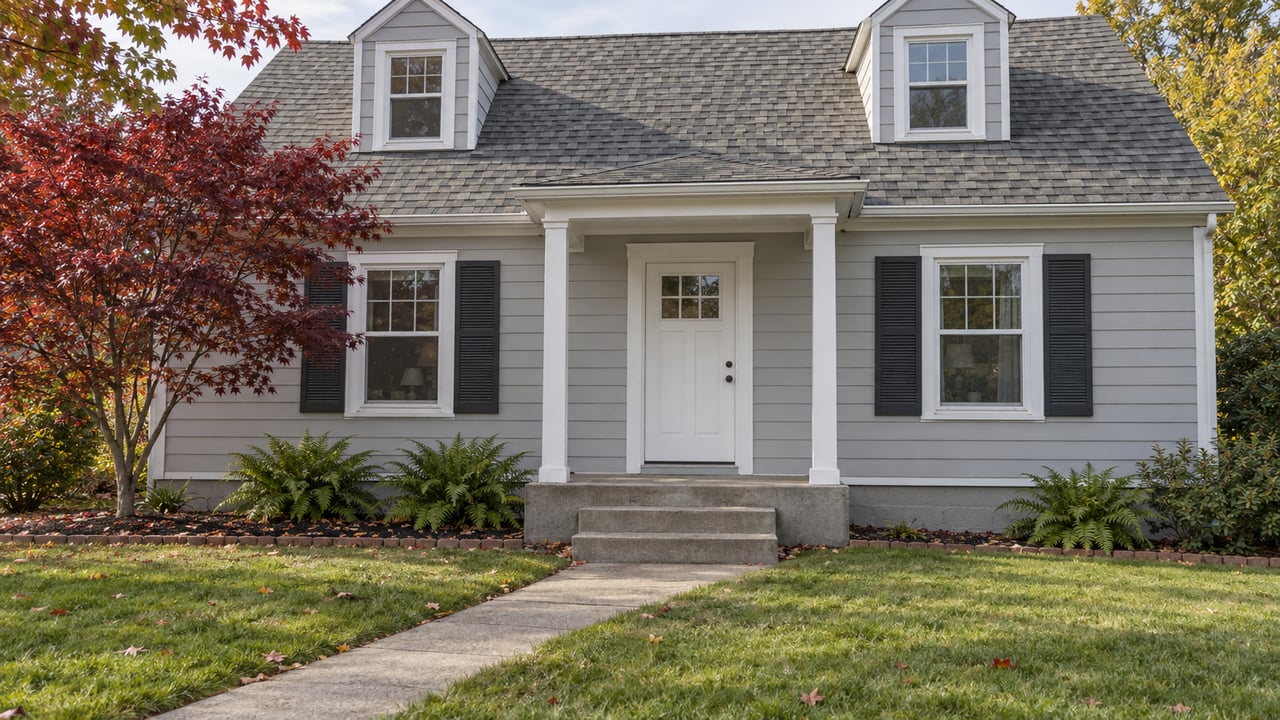
In Junction City, New Homes Wait for the Sewer Plant
October 22, 2026
October 22, 2026
In most Lane County towns, buyer demand and builders' timelines decide how many new homes go up each year. Junction City works differently. Since December 2, 2024, every new home there has needed a sewer hookup, and hookups are capped under an agreement with Oregon's Department of Environmental Quality. The cap rises a little each time the city finishes a required task. In June 2026, Public Works Director Gary Kaping told the City Council that the city had 90 hookups available and that all of them were spoken for.
If you're comparing Junction City with Eugene, Springfield or Coburg, this matters more than any price chart. It decides what you can buy here over the next few years.
The agreement is a Mutual Agreement and Order, or MAO. It covers the city's wastewater permit for discharging treated water into Flat Creek. According to the May 12, 2026 City Council packet, the MAO sets "stringent facility connection limitations," which stood at 91 equivalent dwelling units, or EDUs, at that point. Each completed milestone frees only "10 to 50 more connections," and the agreement's anticipated term is 10 years.
Six weeks later, the June 23 council minutes record Kaping's explanation of how the hookups are handed out. Requests are first come, first served. As new EDUs open up, he alternates among developers to let them know. Staff track every request and hookup in writing. DEQ doesn't count an EDU as connected until the home is occupied.
That last rule decides when a home counts. A finished house that nobody has moved into hasn't used up its hookup yet. So a hookup a builder has lined up isn't counted until a buyer moves in, and the 90 that are spoken for may not show up as completed homes for some time.
The city also has a land-use moratorium on development, adopted October 22, 2024, under ORS 197.505 to 197.540. It has been extended on May 13, 2025, on November 12, 2025, and a third time effective June 10, 2026. The current extension runs through December 10, 2026.
The city's August 2026 wastewater strategic planning report lists the MAO's connection schedule. Each new allowance depends on a task being completed, not on a date:
| Milestone the city must complete | New connections allowed, up to |
|---|---|
| Before any compliance tasks | 20 EDUs |
| Compliance task 5 | 20 EDUs |
| Compliance task 7 | 20 EDUs |
| Compliance task 8 | 30 EDUs |
| Compliance tasks 9 and 10, each | 20 EDUs |
| Predesign reports for Subprojects 1 and 2, each | 30 EDUs |
| Updated draft Facilities Plan | 30 EDUs |
| Final design reports for Subprojects 1 and 2, each | 30 EDUs |
| Construction and startup of Subproject 1 | 30 EDUs |
The report says these are "cumulative connections that can be made once the City accomplishes the tasks." Several of the later steps are design and construction milestones for a treatment system. As the next sections show, that system's design is still undecided.
Several named projects are already moving through city review:
Together, those three projects add up to more than 220 planned homes and apartments, against a pool of 90 hookups that were already spoken for. City records don't say which project holds which hookups or how many EDUs an apartment unit counts as. Still, the numbers make the timing clear. When Lookout Eugene-Springfield reported on the wastewater question in July, City Administrator pro tem Spencer Nebel told the outlet that the city is letting permits go forward on a "rotating basis" for projects already on the books.
"Housing will be allowed on a very incremental basis until wastewater issues are addressed." Spencer Nebel, quoted by Lookout Eugene-Springfield
For a buyer, this means a new home in Junction City is usually one of a few dozen homes released per milestone, and the milestones arrive at the speed of compliance work. Existing homes already have their connections, so they aren't part of the queue.
The supply limit shows up in RMLS's Market Action report for Lane County. Here are the Junction City area figures for January through September of each year, with the countywide median for comparison:
| January to September | 2025 | 2026 |
|---|---|---|
| Junction City new listings | 204 | 155 |
| Junction City pending sales | 157 | 129 |
| Junction City closed sales | 142 | 131 |
| Junction City median sale price | $489,500 | $411,200 |
| Junction City average days on market | 69 | 76 |
| Lane County median sale price | $444,700 | $448,000 |
From January through September 2026, new listings in Junction City fell by about a quarter compared with the same months of 2025. Over the same period, the area's median sale price dropped below the Lane County median, after running well above it a year earlier. Measured over the 12 months ending in September 2026, Junction City's average sale price was down 15.1%, while Lane County's was down 0.4%.
RMLS doesn't break these figures out into new construction and resales. On their own, the numbers can't tell you why prices fell. With 131 closed sales, a handful of transactions can move the median a lot. What the table does show is a smaller market, with fewer listings, fewer pending sales and longer days on market, in a town where new construction is capped by sewer capacity. In September 2026 alone, the area had 48 active listings and 10 closed sales.
The connection cap stays until the city expands its wastewater capacity. The August report compares two main paths:
The regional connection is the city's current preferred option. In the Lookout report, Nebel put the project at more than $50 million, which "would require bonding that ratepayers would support through increased rates." The city's report and that quote don't explain the gap between the two figures.
The dates that decide which path wins all fall in 2027 or later:
Utility bills are part of the cost of owning a home here. On July 20, 2026, water rates rose 8% and sewer rates rose 5%, which adds about $5.30 a month to the average residential bill. The July council packet notes that Junction City's rates were the lowest among comparable cities and stay toward the bottom even after the increase. That increase covers operating costs. Bonding for the larger project would come on top of it.
The third moratorium extension tells the council to decide, by December 10, 2026, whether to extend, revise or repeal the moratorium. The resolution itself anticipates that another extension or a replacement may be needed. The October 13 council agenda had no moratorium item.
Whatever the council decides in December, the DEQ connection cap stays in place until the required improvements are finished.
Does the cap apply to homes that are already built? The cap limits new connections to the sewer system. Existing homes are already connected.
Could connection fees change? Council minutes show water system development charges were last updated in 2005 and sewer charges in 2007, and the city has said it plans to review its fees and those charges. In April 2026, the council also approved a $13,600 consultant contract to calculate what regional sewer system development charges might cost.
Where can I follow the decisions? The city posts council and Planning Commission packets and minutes at junctioncityoregon.gov. The December moratorium review and the wastewater updates will show up there first.
This post is general information, not legal, tax or financial advice. If a moratorium, fee or utility rate affects your purchase, confirm the details with the city and the right professional.
At Parker Heights Realty, our office is right here in Junction City, and we follow the sewer queue as closely as the listings. If you're weighing a new build here against an existing home or against a home elsewhere in Lane County, schedule a free consultation and home valuation. We'll go through the hookup timeline and the September numbers with you, using your own price range.
Stay up to date on the latest real estate trends.
We pride ourselves in providing personalized solutions that bring our clients closer to their dream properties and enhance their long-term wealth. Contact us today to find out how we can be of assistance to you!